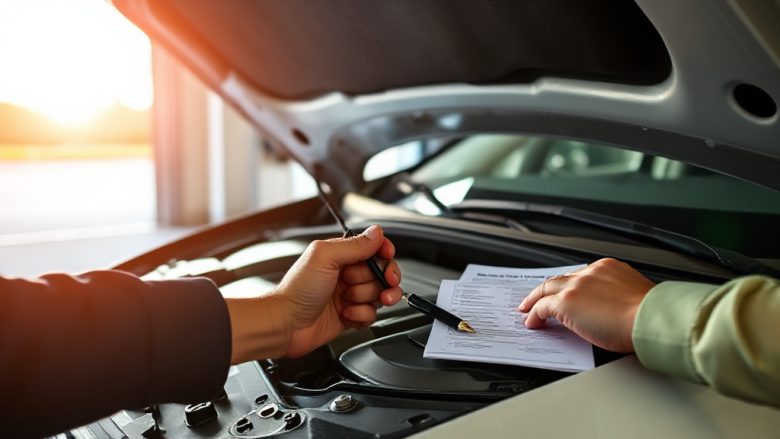
A breakdown on the hard shoulder costs you far more than the twenty minutes it takes to run a proper car maintenance checklist before a road trip. Recovery, missed ferries, a night in a budget hotel, and the price of a garage that knows you have no choice — that little lot can run into hundreds. Twenty minutes in your own driveway, with the kettle on and no pressure, is the cheapest insurance you will ever buy. I have been on both sides of this: the driver stuck at the services and the mechanic called out to a car that would have passed a basic check. The second one is always more annoying, because it was avoidable.
Here is the checklist I would hand to a friend. Work through it in order, tick as you go, and do it at least a day before you leave so any parts you need can be bought without panic.
Under the bonnet
Start with the engine cold, because half of these readings are meaningless when everything is hot. Pop the bonnet, prop it properly, and take a good look before you touch anything. You are looking for fresh stains, cracked hoses, or anything that smells of hot rubber or sweet syrup.
Oil is first. Pull the dipstick, wipe it with a rag, push it back in fully, then pull it out again and read the level. It should sit between the two marks, closer to the top than the bottom. If it is low, top up with the grade listed in your handbook — not whatever is cheapest on the shelf. Dark oil is normal; gritty oil or a milky, coffee-coloured froth is not, and that means a garage visit before you go anywhere.
Coolant comes next. Never open the cap when the engine is warm, even if it has been sitting for an hour. The system holds pressure and it will scald you. With a cold engine, check the level against the marks on the side of the expansion tank and top up with the correct mix if it is low. If you are adding coolant every few weeks, you have a leak and a road trip is the worst place to find out how bad it is.
Brake fluid lives in a small reservoir near the back of the engine bay. The level drops slightly as pads wear, so a low reading can simply mean worn brakes rather than a leak. Either way, it is worth knowing before you load the car up. Screen wash is the one people forget, and on a long motorway run in October you will get through it faster than you think. Fill it with a proper screen wash concentrate, not washing-up liquid, which will strip your paint and clog the jets.
Finally, look at the battery. Check the terminals for white or green crust and give them a clean if needed. If the car has been slow to start, or the battery is more than four or five years old, get it tested. A failing battery is one of the most common causes of a car that will not start on a cold morning far from home.
Around the car
Now walk the car. This is the part where you find the things that would have ruined your day.
Tyres first, and not just a glance. Check the pressures when the tyres are cold, using the figures on the sticker inside the driver’s door or in the handbook. Remember that a fully loaded car with luggage and passengers often needs higher pressures at the rear — that detail is on the same sticker. Under-inflated tyres wear out faster, use more fuel, and get dangerously hot at motorway speeds. Over-inflated ones give you less grip and a harsher ride.
While you are down there, look at the tread. The legal minimum in the UK is 1.6mm across the central three-quarters of the tyre, but for a long trip I would want noticeably more, especially if rain is forecast. Check for cuts, bulges, or objects stuck in the tread. A bulge in the sidewall means the tyre is scrap, no argument. Don’t forget the spare, if you have one — a flat spare is no help at all. If your car uses a repair kit instead, check the sealant has not expired.
Lights are quick to check and easy to miss. Get someone to help, or park facing a wall and use the reflection. You want sidelights, dipped beam, main beam, indicators, brake lights, reverse lights, and fog lights all working. A failed brake light is a favourite for a roadside stop, and it takes two minutes to replace a bulb.
Wipers are next. If the blades are leaving streaks or squeaking, replace them now. You will thank yourself in the first downpour. Top up the screen wash again if you have used any during the checks.
Underneath, look for anything hanging low or leaking. A quick torch on the driveway will show you fresh oil, coolant, or brake fluid patches. Then check the tyres once more for anything you missed. If you have a jack and the time, a quick wiggle of each wheel with your hands at twelve and six o’clock will tell you if a wheel bearing is on its way out. Any clunk or excessive movement needs looking at before you load up.
Inside the car
The cabin is where you will spend the next several hours, so make it comfortable and safe.
Check the driver’s seat position and mirrors before you set off, but also check that the seat belts are not frayed or slow to retract. Give them a firm tug. If a belt is damaged, it will not do its job in a crash.
Air conditioning is not just a luxury on a long drive. It keeps the windscreen clear and keeps you alert. Run it for ten minutes on full cold and check it actually gets cold. If it does not, you may just need a regas, but that is a job for a garage and worth doing before you leave.
Clear out the junk. A loose water bottle or a heavy box can become a missile in an emergency stop. Put everything in the boot or secure it. Check the boot too, and make sure the spare wheel, jack, and wheel brace are all present and that you know how to use them. If you have never changed a wheel, read the handbook now rather than at the side of the road in the dark.
Finally, check your documents. Licence, insurance, MOT, and breakdown cover. Keep them somewhere you can find them without emptying the glovebox. If your breakdown cover has lapsed, renew it before you go — it is the one thing you hope not to use, but the one thing you will be glad of if you do.
Emergency kit
You do not need to carry a full workshop, but a small kit can turn a disaster into an inconvenience.
At a minimum, pack a torch with working batteries, a hi-vis vest for each occupant, a warning triangle, and a basic first aid kit. Add a bottle of water and a snack, especially if you are travelling with children. A phone charger that works from the car’s socket is worth its weight in gold. In winter, add a blanket, a scraper, and a pair of gloves.
If you have space, a small tyre pressure gauge and a can of tyre sealant can get you to a garage without changing a wheel on a busy road. And a roll of duct tape and a couple of cable ties have fixed more road trip problems than any fancy tool kit.
That is the whole list. Twenty minutes, a torch, and a bit of common sense. Do it the day before you leave, tick everything off, and then forget about the car and enjoy the drive. The point of a car maintenance checklist before a road trip is not to find problems — it is to make sure you do not find them at seventy miles an hour with the family in the back.