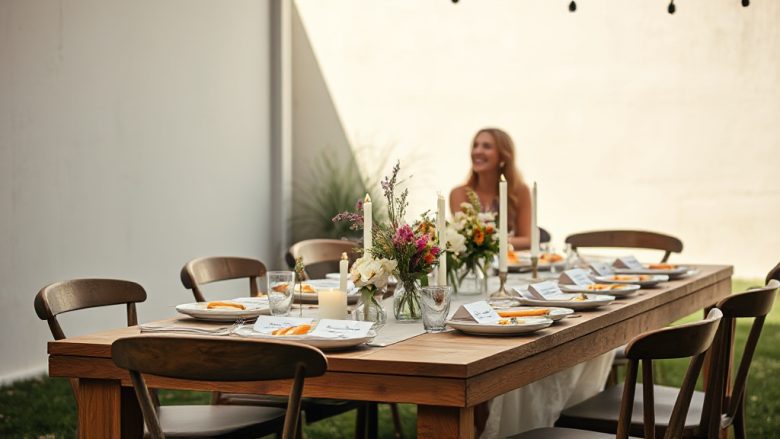
Most couples I meet have already looked up the average wedding cost before they sit down with me, and it usually scares them. The figure they find is somewhere in the tens of thousands, and it keeps climbing. But the number almost nobody talks about is the one that actually decides whether a wedding feels affordable: the cost per guest. That single figure drives your venue, your catering, your table linen, your favours, your invitations and half the small decisions you’ll make over the next year. Understand it, and you understand how to plan a wedding on a budget without turning your day into a spreadsheet with a cake.
Set a Realistic Total Before You Book Anything
Before you tour a single venue, decide what you can spend in total. Not the venue budget. The total. Then subtract the things that are non-negotiable for you: the photographer, the dress, the band, whatever matters most. What’s left is your working budget for everything else, and it will look smaller than you hoped. That’s normal.
I ask couples to split their total into three pots. The first covers fixed costs you’ve already committed to, like deposits. The second covers estimated costs you can still change, like catering headcount. The third is a buffer of roughly ten per cent, which is the pot most couples forget and then raid in a panic three weeks out. If your total is fifteen thousand, your buffer is fifteen hundred. Protect it.
Write the budget down somewhere you both check weekly. A shared note on your phones works fine. The point isn’t accounting purity. It’s catching drift early, when it’s still cheap to fix.
Guest List Math: Where the Budget Actually Lives
Here’s the honest arithmetic. If your venue charges eighty pounds per head for food and drink, every additional guest costs eighty pounds before you’ve bought them a chair cover or a slice of evening cake. Invite twenty extra people and you’ve added sixteen hundred pounds. That’s the deposit on a honeymoon. That’s a decent photographer upgrade. That’s a real number.
So build your list in tiers. Tier one is people without whom the day would feel wrong. Tier two is people you’d love to have but could celebrate with separately. Tier three is everyone else, including plus-ones you’ve never met and colleagues you like but don’t see outside work. Send tier one invitations first. If your numbers allow, send tier two. Tier three gets a warm conversation, not an invitation.
Be prepared for the awkwardness. It passes. A smaller room with people who genuinely know you both beats a big room full of polite small talk, and it costs a fraction as much. If you’re torn, ask yourself whether you’d take that person out for dinner on your own money. If not, they’re tier three.
Venue and Catering Swaps That Save Real Money
The venue and the food are where most budgets go to die, and they’re also where the biggest savings hide. The trick is swapping, not cutting.
Swap a Saturday in June for a Friday in October. Venues often drop their hire fee by a third or more for off-peak dates, and your guests will still come. Swap a full sit-down meal for a generous buffet or a late-afternoon ceremony followed by a long, relaxed meal that doubles as the evening food. Swap a hotel ballroom for a village hall, a community space, a brewery taproom or a marquee on family land. These venues rarely charge corkage, which alone can save hundreds.
Catering is the line item to interrogate hardest. Ask whether the venue allows external caterers. Ask whether they’ll do a set menu rather than a per-head package. Ask what’s included in the per-head price and what’s added later, because service charge, cake cutting and corkage are the classic ambushes. A food truck or a family-style sharing menu often costs less per head than a plated three-course dinner and tends to get better reviews from guests.
Drink is the quiet budget killer. A welcome drink, wine with the meal, and a cash bar for the rest is a perfectly respectable arrangement. Nobody remembers the free cocktails. They remember whether they had a good time.
DIY Where It Counts, and Nowhere Else
DIY is not automatically cheaper. It’s cheaper when you have the skill, the time and the willingness to still like each other at the end of it. It’s more expensive when you buy equipment, make three versions and settle for the fourth.
Do it yourself on the things that are visible, personal and low-risk. Invitations, place cards, signage, a playlist, simple table flowers bought from a market the morning before. These are the details guests actually notice, and they carry your personality.
Pay someone for the things that fail loudly if they go wrong. Photography, music, hair and makeup, and anything involving fire, electricity or a large crowd. A friend with a camera is a lovely gesture until the photos are blurry. A borrowed sound system is fine until the speeches can’t be heard.
If you’re doing flowers yourself, buy in season and buy in bulk from a wholesaler or a flower market. Choose three varieties, not ten. Practice one arrangement a month before, then repeat it. That’s the whole secret.
Negotiation Scripts You Can Actually Use
Negotiating doesn’t mean haggling over the price of a dress. It means asking better questions and being willing to walk away, politely.
When a venue quotes a package, say this: “That’s a bit above where we need to be. Is there flexibility on the hire fee if we take a Friday in November, or if we bring our own caterer?” You’ve given them two levers and kept the conversation friendly.
When a supplier quotes a price, ask: “What’s included, and what would you take out to bring the cost down?” This is far more effective than asking for a discount, because it lets them protect their margin while you protect your budget.
When you’re comparing two suppliers, mention it plainly: “We’re deciding between you and one other option. Is there anything you can do on price or extras if we book this week?” Only say this if it’s true. Suppliers talk to each other, and a bluff gets remembered.
Finally, always ask about payment schedules. Spreading deposits and balances over twelve months is often easier than a discount, and it keeps your cash flow calm.
The Emergency Fund Nobody Plans For
Something will cost more than you expected. It always does. The dress needs altering twice. The guest count creeps up. A supplier adds a travel fee you didn’t see coming. This isn’t bad planning; it’s weddings.
Set aside a small emergency fund separate from your buffer, and decide in advance what you’ll cut if you need to. The evening buffet, the extra dessert, the second photographer. Having the decision pre-made stops a small overspend from becoming a large argument.
And keep one rule: if a cost isn’t in the budget, it waits a week. Most impulse wedding purchases feel less essential after seven days. The ones that survive the week are usually worth it.
Frequently Asked Questions
What’s the biggest mistake couples make when planning a wedding on a budget?
Booking the venue before setting a total budget. Once the venue and date are locked, most of your costs are effectively fixed, and you lose your negotiating position on everything else.
Is a smaller wedding really cheaper?
Almost always, because catering, seating, invitations and favours scale per guest. Cutting twenty people typically saves more than cutting any single supplier.
How do I save money without guests noticing?
Spend on what people experience: good food, good music, comfortable seating and a warm welcome. Save on what they don’t: elaborate stationery, expensive favours and a huge cake. Guests remember how the day felt, not what it cost.
When should I start planning to get the best prices?
Twelve to eighteen months ahead gives you the widest choice and the most leverage, especially for off-peak dates. Shorter timelines can still work, but you’ll be choosing from what’s left rather than negotiating from strength.