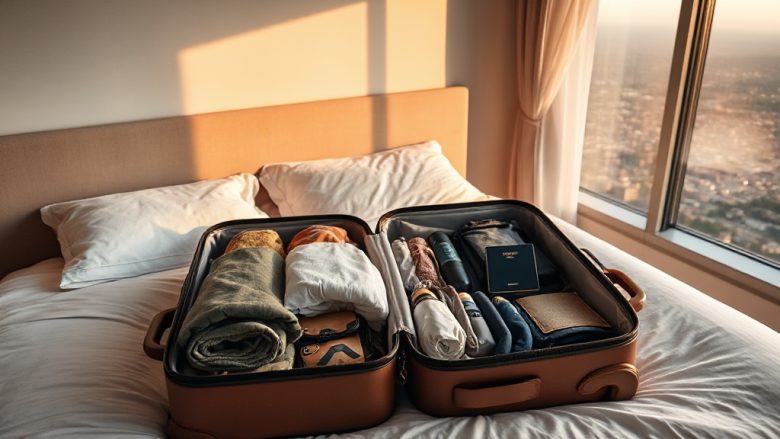
I once watched a man in a Lisbon hotel lobby open a suitcase so overstuffed that a hairdryer, two hardback books and a full-sized pillow burst out onto the marble floor. He was flying home in three hours. I’ve been that man. After eight years as a tour manager and more flights than I can count, I’ve learned that most packing advice fails because it starts with the bag instead of the trip. The fix isn’t a longer checklist. It’s a small set of rules that hold up whether you’re gone for two nights or two months.
What follows is the expert advice on travel packing I give friends before their first big trip: a core kit, a way to adapt it by trip type, a method for travelling with one bag, and a short list of things that never earn their place. No gimmicks, no gear sponsorship, just what survives contact with real airports.
The Five-Item Core Kit
Every trip I take starts with five things I treat as non-negotiable. They aren’t glamorous, but each one solves a problem that would otherwise cost me money or sleep.
First, a single universal power adapter with at least two USB ports. Hotel rooms rarely have enough outlets, and a multi-plug brick means you’re not fighting over the one socket behind the bedside table. Second, a lightweight packable rain shell. It weighs almost nothing, doubles as a windbreaker, and has saved me from a soaked day in cities where the forecast lied. Third, a flat pouch for documents and a spare card. Keep your passport, a backup payment card and a printed copy of your first night’s address together so you’re never digging through a bag at a border.
Fourth, a small medical pouch: painkillers, plasters, rehydration sachets, any prescription in its original packaging. Pharmacies exist everywhere, but not always at 11pm when you land. Fifth, one refillable water bottle. Airport fountains have improved enormously, and this single item removes the need to buy plastic bottles all week. That’s the kit. Everything else is negotiable.
The point of a core kit is decision fatigue. If five things are already decided, you only have to think about clothes and the specific purpose of the trip.
Packing by Trip Type
Generic packing lists fail because a beach week and a business trip share almost nothing. Here’s how I adjust the core kit for the three trips I take most often.
City breaks
Cities punish overpacking because you’ll walk more than you expect and carry your bag up stairs, onto trams and through crowded stations. I pack for three days regardless of trip length and do laundry once. Two pairs of trousers, four tops, one light layer, one pair of broken-in walking shoes and a second pair that packs flat. Shoes are the heaviest thing in any bag, so I wear the bulkiest pair on travel days. I add a small crossbody bag for daytime so the main luggage stays at the accommodation.
Beach trips
Beach packing is about fabric, not quantity. Two swimsuits so one can dry while you wear the other. One sarong or large scarf that works as a towel, a cover-up and a shade layer. Loose linen and cotton beat technical fabrics in heat because they breathe and don’t hold odour. I bring one pair of sandals and one pair of closed shoes for evenings or rocky ground. Sunscreen goes in a sealed bag, always, because a leaked bottle has ruined more of my clothes than rain ever has.
Business travel
Business trips are won or lost on wrinkles and cables. I pack one dark suit or blazer that matches two pairs of trousers, three shirts, and a spare tie or scarf. A travel steamer is worth its space if you have presentations; otherwise hang clothes in the bathroom while you shower. Cables, chargers and adapters go in one pouch so nothing goes missing between hotel rooms. I keep a printed one-page itinerary in my jacket pocket because phone batteries die at the worst moments. Comfortable shoes that still look sharp matter more than a third pair you’ll never wear.
The One-Bag Method
Travelling with a single carry-on bag isn’t a personality trait. It’s a constraint that forces better decisions. The method is simple: choose the bag first, then let the bag set the limit.
I use a 40-litre carry-on with compression straps and a clamshell opening. Clamshell bags beat top-loaders because you can see everything without unpacking. I roll soft items like t-shirts and underwear, then fold structured pieces like shirts and trousers flat on top so they arrive with fewer creases. Socks and small items fill the gaps inside shoes. Anything I might need during the flight — charger, medication, a layer — goes in the lid or a small personal item.
Weight matters as much as volume. Most airlines cap carry-on around 7 to 10 kilograms, and a bag that’s easy to lift overhead is a bag you won’t resent by day four. I weigh mine at home on a luggage scale. If it’s over, something comes out, and it’s usually the third pair of shoes.
The one-bag method also changes how you move. No baggage claim, no lost luggage, no waiting. You walk off the plane and start your trip. Once you’ve done it a few times, checking a bag starts to feel like a choice you’d rather not make.
What Experts Never Pack
The fastest way to pack better is to stop packing things that never earn their place. Here’s what I leave behind, and why.
Full-sized toiletries. Hotels provide the basics, and buying shampoo at your destination costs less than the space it takes. I decant what I need into small refillable bottles for trips longer than a week.
More than two pairs of shoes. Shoes are heavy, bulky and rarely worn as often as you imagine. One worn pair, one packed pair, done.
“Just in case” formal wear. Unless there’s an event on the itinerary, a formal outfit is dead weight. If something comes up, you can rent or buy locally.
Multiple devices and their chargers. One laptop or tablet, one phone, one charger. Every extra device adds cables, adapters and anxiety.
Guidebooks and paperbacks. I love them, but a single book weighs more than a week of t-shirts. I carry one slim paperback and read on my phone for everything else.
Excessive underwear. The rule is simple: pack for one week, not for the whole trip. Laundry exists, and doing it once is cheaper than paying for an overweight bag.
Final Pre-Flight Check
Before I close the bag, I run the same five checks every time. Passport, visa if needed, and boarding pass accessible without opening the main compartment. Medications in the personal item, not the overhead bag. Chargers and adapters in one pouch. A change of clothes and a toothbrush in the carry-on in case the checked bag goes missing. And a photo of the packed bag on my phone, which has twice helped with insurance claims.
Then I do one last thing: I pick up the bag and walk a lap around the room. If it feels heavy now, it will feel heavier at the airport. The best expert advice on travel packing isn’t about fitting more in. It’s about needing less, and knowing exactly where everything is when you land. Pack once with these rules and you’ll never go back to the bursting suitcase in the lobby.